Smoking-Friendly Izakayas and Bars in Tokyo
Where indoor smoking is still legal in Tokyo bars: the small-venue exemption in Japan's Health Promotion Act, what the entrance stickers mean, and which yokocho alleys have the most smoking-friendly spots.
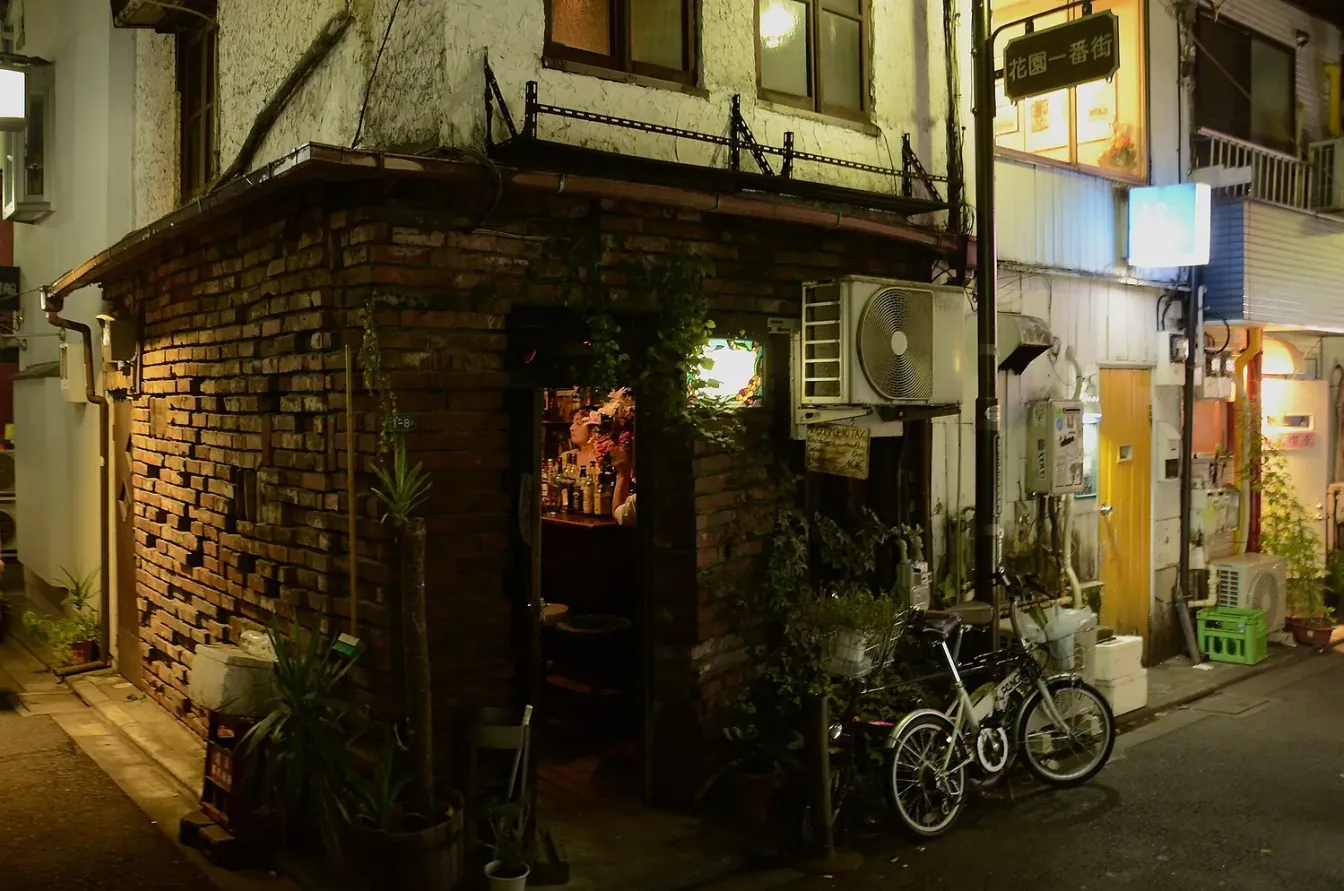
Some Tokyo bars and izakayas still legally allow smoking at the table, even though the 2020 revision to the Health Promotion Act banned indoor smoking almost everywhere else. The exemption only covers a specific kind of small, pre-existing venue — look for a 喫煙可能店 sticker at the door before assuming a bar allows it.
Why some bars are exempt from the indoor smoking ban
A venue can legally keep allowing smoking at every table only if it meets three conditions at once, under a transitional exemption in the Health Promotion Act for what the law calls an “existing specified establishment providing food and drink” (既存特定飲食提供施設):1
- It was already open and operating on April 1, 2020, the day the ban took effect.
- Its customer seating area is 100 square meters or less.
- Its capital, or total investment for a sole proprietor, is ¥50 million or less.
That combination describes most family-run izakaya, tiny counter bars, and single-room yakitori stalls, and excludes almost every chain restaurant, hotel bar, and anything built after 2020. A venue with paid staff also needs written consent from every employee before it can register as smoking-permitted, on top of the three conditions above — one more reason the exemption tends to land on small, owner-run places rather than anywhere with a real staff roster.
Reading the entrance sticker
Japan uses different signs for different smoking setups, and they aren’t interchangeable:
| Sticker | What it means |
|---|---|
| 喫煙可能店 / 喫煙可能室 | ”Smoking permitted” — the venue qualifies for the small-business exemption, and smoking is allowed either everywhere inside or in one specific room. |
| 喫煙専用室 | ”Smoking-only room” — a separate room where you can smoke but can’t eat or drink, common at newer restaurants and pubs that built a booth instead of qualifying for the exemption. |
| 禁煙 | ”No smoking” — the default everywhere else, including venues that would qualify for the exemption but chose to go smoke-free anyway. |
Every facility is legally required to post a sign at the entrance stating which category it falls into, and a separate sign at the smoking room’s own entrance if only part of the venue allows it.3 Anyone under 20 is barred from entering a room where smoking is allowed — even a non-smoker, even with an adult, and even an employee just there to clean.2
No sticker, no smoking: a place calling itself a “smoking bar” isn’t automatically exempt under the law. If you don’t see the entrance sticker, ask before you light up rather than assuming from the atmosphere.
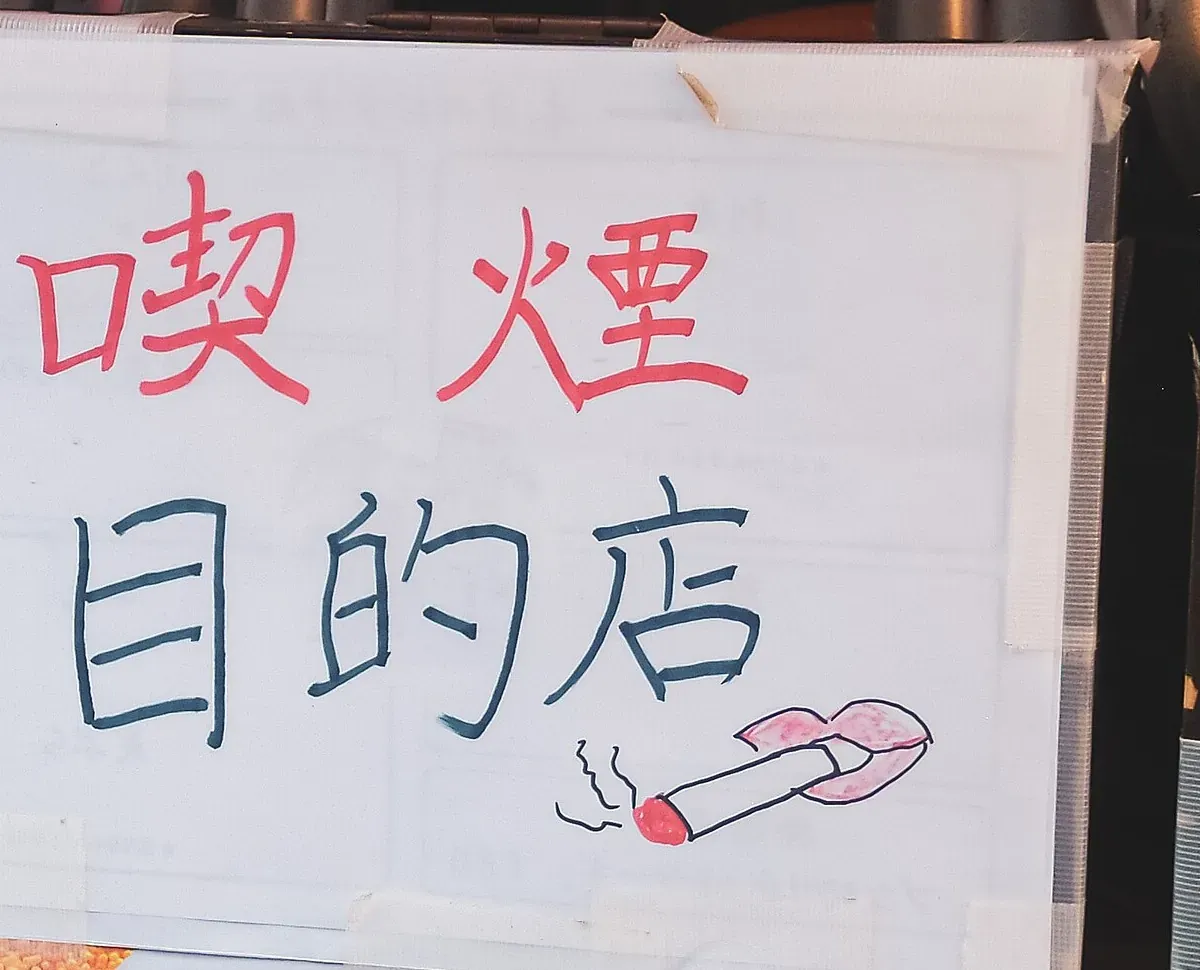
Not every venue uses the printed government sticker: this bar in Kanda simply wrote out 喫煙目的店 (“smoking-purpose establishment”, the category used by cigar bars and shisha lounges) by hand and taped it to the door.
Where to find them: Tokyo’s smoking-friendly alleys
| District | Ward | What you’ll find |
|---|---|---|
| Golden Gai | Shinjuku | Over 200 tiny bars packed into a few narrow lanes; a large share allow smoking at the counter. |
| Omoide Yokocho | Shinjuku | Yakitori stalls near the station’s west exit, many with charcoal grills and smoke as part of the atmosphere. |
| Nonbei Yokocho | Shibuya | A much smaller cluster, roughly 40 bars, quieter and more low-key than Golden Gai. |
| Hoppy Dori | Asakusa | Stew and yakitori stalls, mostly semi-outdoor tented seating rather than fully enclosed rooms. |
These four are dense clusters of small, independently run places — exactly the profile that tends to qualify for the exemption above. Even so, check the door sticker at each individual bar; the exemption is per-venue, not per-neighborhood.
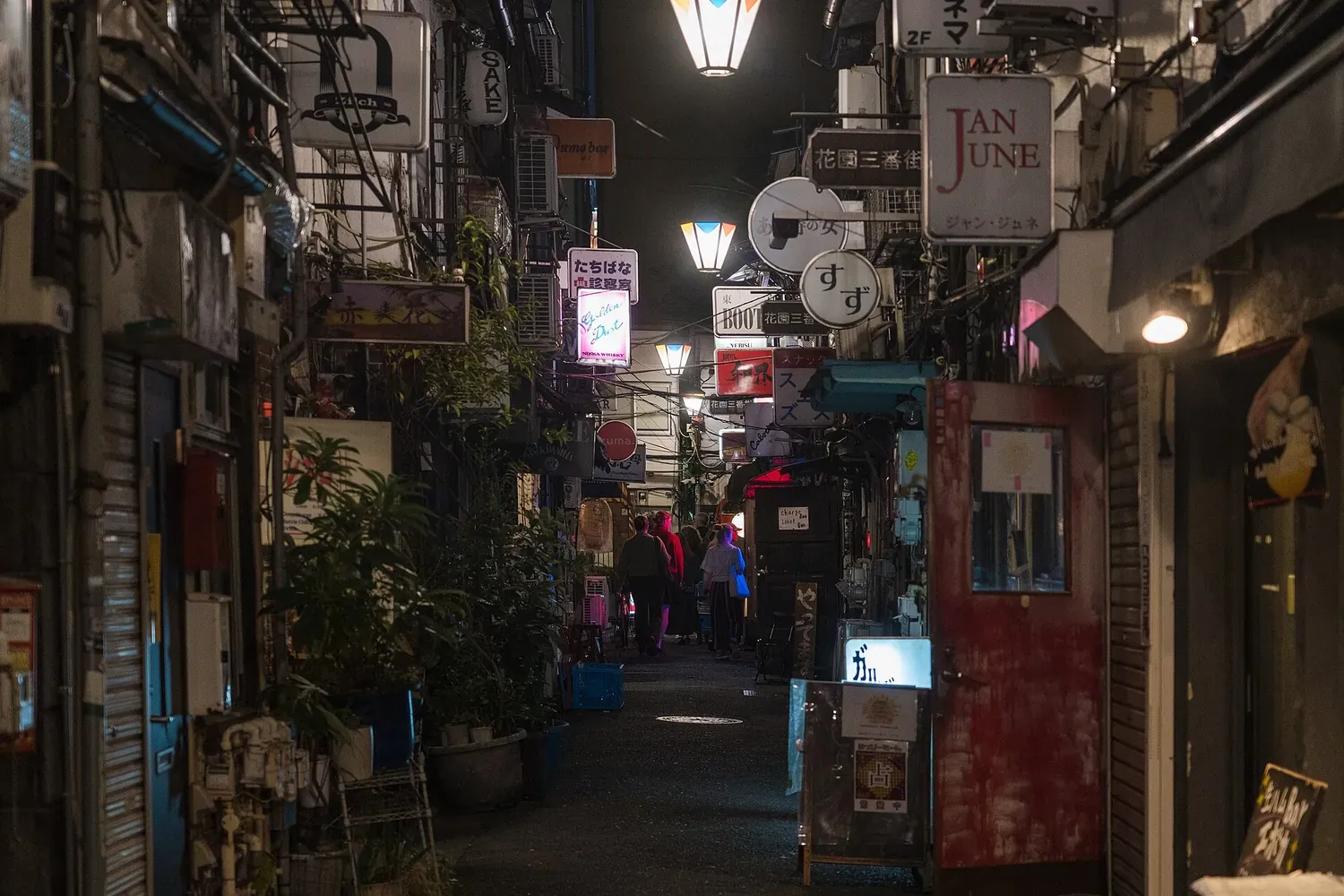
One of Golden Gai’s six alleys after dark, each doorway a separate bar with room for only a handful of customers at the counter.
Etiquette: the otoshi charge
Expect a seating charge: most of these small bars automatically serve a small appetizer called otoshi (お通し) the moment you sit down, and charge for it whether you asked for it or not — typically ¥300–600, occasionally up to ¥800 at nicer places. It functions as a cover charge, not an optional order, so don’t send it back expecting a refund.
Frequently Asked Questions
Can bars in Tokyo still allow smoking indoors?
Yes, but only if they meet a specific legal exemption: open before April 1, 2020, 100 square meters or less of seating, and ¥50 million or less in capital. Look for a 喫煙可能店 sticker at the entrance to confirm.
How do I know if a Tokyo bar allows smoking?
Check the entrance for an official sticker. 喫煙可能店 or 喫煙可能室 means smoking is allowed, 喫煙専用室 means only a separate room does, and 禁煙 means the whole place is non-smoking.
Can I bring my teenager into a smoking-permitted izakaya?
No. Anyone under 20 is barred from entering a room where smoking is allowed, regardless of whether they smoke or are with an adult.
Which Tokyo neighborhood has the most smoking-friendly bars?
Golden Gai in Shinjuku, with over 200 tiny bars packed into a few narrow lanes, has the highest concentration. Omoide Yokocho, also in Shinjuku, is a close second.
What is otoshi, and do I have to pay it?
Otoshi is a small appetizer served automatically the moment you sit down at most izakaya, functioning as a seating charge. It typically costs ¥300–600 and isn't optional, even if you didn't order it.
Related Guides
Sources
Show all 3 links
Primary documents and reporting this guide is based on.
- 1 The Three Conditions for Tokyo's Small-Bar Indoor Smoking Exemption 既存特定飲食提供施設と喫煙目的施設
City of Yokohama
- 2 Health Promotion Act, Article 33: Under-20s Barred From Smoking Rooms 健康増進法
Ministry of Health, Labour and Welfare
- 3 Tokyo's Entrance Signage Requirement for Smoking and Non-Smoking Venues 標識の掲示義務について
Tokyo Metropolitan Government (Tama-Fuchu Public Health Center)